If you want one answer: the best HOTAS for MSFS 2024 and DCS, for most people, is the Thrustmaster T.16000M FCS HOTAS at $169.99. It is the cheapest set with a hall-effect stick, and sensor type is the one spec that predicts whether you still like your hardware in three years. Its throttle is the compromise, and the rails grab out of the box.
If you have more to spend, the honest split is this. Under $170 you are choosing between a toy and a tool. Around $250 to $400 you are buying precision and paying for it in setup time. Above that you are buying a 1:1 military replica with quirks it has carried for over a decade. And if you only ever fly airliners and GA in MSFS 2024, you should probably not buy a HOTAS at all. More on that below, because it is the recommendation this kind of post usually skips.
Prices were checked in July 2026 and are list prices at the vendor. They drift, they go on sale, and they vary by region. Treat them as a tier indicator, not a quote.
The short answer
Entry, $99.99: Thrustmaster T.Flight Hotas One. Buy this if you are not yet sure you like flight sims and want to spend the least money finding out. Buy it knowing you will replace it.
Entry-plus, $169.99: Thrustmaster T.16000M FCS HOTAS. Buy this if you want a stick that will outlast your interest. The best value in the category and the default recommendation.
Mid, from $119 stick-only: VKB Gladiator NXT EVO. Buy this if precision matters more to you than convenience and you accept that you will be configuring software, not plugging in and flying.
Mid-plus, $399.99 US MSRP: Turtle Beach VelocityOne Flightdeck. Buy this if you want the most buttons per dollar in a single box and you are on PC.
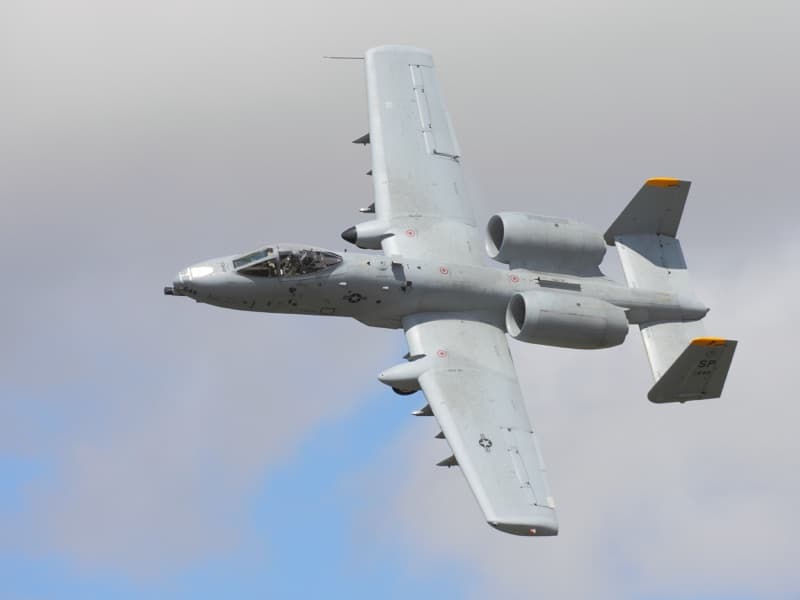
High end, $599.99: Thrustmaster HOTAS Warthog. Buy this if you fly the A-10C and want the actual aircraft's grip. Budget for rudder pedals on top, because it has no twist axis.
Enthusiast, modular: VIRPIL VPC WarBRD-D base at $259.95 plus a grip. Buy this if you want to build exactly the setup you want and swap springs to tune the feel. The grip is a separate purchase on top of the base price.
MSFS 2024 and DCS want different things
This is where most buyer's guides wave a hand and say "DCS needs more buttons". That is true and useless. Here is the specific version, taken from our own checklists.
What an airliner actually needs
The PMDG 737-800 cold and dark start runs 158 steps across 15 phases. Almost none of those steps want a button on a stick. They want a mouse and an overhead panel. What the airliner actually demands from your hardware is a throttle you can set precisely and repeatably.
Look at what the checklist asks of the thrust levers specifically. On start you get Thrust Levers - ADVANCE to ~40% N1. That is a target you hit by feel and verify on the gauge, not a slam to the stop. On approach the flap schedule is staged: Flaps 1, then Flaps 5, then Flaps 15, then Flaps 30 (or 40), each at its own speed. On rollout it goes Thrust Levers - IDLE at touchdown, then Reverse Thrust - SELECT, then at 60 knots REVERSE - decrease to idle reverse before taxi speed, then Reverse Thrust Levers - DOWN once engines reach idle.
That sequence is the argument for a throttle with real travel and a detent you can find without looking. A fighter stalk with 80mm of throw and no reverse gate can be mapped to all of it, but you will be fighting it every landing. The full interactive checklist walks the whole rollout sequence step by step if you want to see where the throttle work actually clusters.
What a fighter actually needs
The DCS A-10C II cold start is 128 steps across 14 phases. The F/A-18C is 130 across 14. The F-16C Viper is 122 across 15. So a fighter start is not actually longer than an airliner start. The difference is what happens after the start, and where the switches live.
The concrete case for a proper throttle is in the Hornet's engine start. The checklist reads Throttle (Right) - IDLE (at 25% N2), carrying the caution: "Advance only after 25% N2 - early advance risks hot start." The next step is Right Engine - MONITOR EGT & RPM, with the warning "Hot start: EGT above 750°C - abort immediately." Then the same again for the left engine.
That is a per-engine throttle movement to a specific position, timed against a gauge, where being early costs you the engine. A throttle with two independently movable levers and a physical idle detent turns that into a motion you do without thinking. A single-lever throttle with no detent turns it into a task you watch.
The other fighter-specific demands: switch count on the grip, because in DCS you want countermeasures, trim, weapon select, and radio under your thumb rather than on a keyboard, and a TDC/slew control, because moving a sensor cursor with a mouse while manoeuvring is miserable. Also worth knowing before you buy: many DCS fighters expect rudder input you cannot get from a stick that has no twist axis.
The honest aside: if you only fly airliners and GA, buy a yoke
A HOTAS is a stick between your legs designed for an aircraft that rolls with a wrist. A 737 and a Cessna do not fly like that. The Cessna 172 checklist runs 108 steps across 15 phases and not one of them is improved by having a fighter grip in your hand.
If MSFS 2024 is your whole hobby, the Honeycomb Alpha Flight Controls yoke at $299.99 and the Honeycomb Bravo Throttle Quadrant at $299.99 are the setup you actually want. The downside is real and worth stating: that is $600 for hardware that is bad at the thing a HOTAS is good at, so the moment you buy a DCS module you will want a stick too. Buy a yoke only if you are confident about what you fly.
If you came here looking for the best flight stick for MSFS 2024 and you fly a mix, some GA, some airliners, the occasional fast jet, then ignore this section. The T.16000M is still your answer.
Hall effect vs potentiometer, and why it is the only spec that predicts longevity
Competitors name-drop hall effect and then recommend potentiometer gear three paragraphs later without flagging it. So, plainly:
How pots fail
A potentiometer measures position with a physical wiper dragging along a resistive track. That contact is the whole mechanism, and it is also the wear surface. As the track wears you get drift (centre moves), spiking (the axis jumps to a value you did not command), and a growing centring deadzone (the stick returns to somewhere near centre, not to centre).
A hall sensor measures a magnetic field with nothing touching anything. Because it is contactless, it does not develop the wiper wear that causes pot spiking. That is the defensible claim, and it is worth the money.
What is not true is the marketing line that hall effect "never wears out" or gives you "zero drift forever". The sensor is only one part. Gimbals, bearings, springs, and centring mechanisms are all still mechanical, and they still degrade. A hall stick removes the most common failure mode, not all of them.
Which of these use which
Which of these is actually a hall effect HOTAS, and which is only half of one:
- Warthog stick: H.E.A.R.T hall effect, 16-bit, 65536 x 65536 values, no gimbals or cardan joints. Warthog throttle: H.E.A.R.T hall effect as well, 14-bit, 16384 values per throttle.
- T.16000M stick: H.E.A.R.T hall effect, 16-bit, 16000 x 16000 values. TWCS throttle: S.M.A.R.T slide rails, 80mm of travel. Thrustmaster claims no sensor type for the TWCS, which is its own answer.
- VKB Gladiator NXT: hall effect.
- Turtle Beach VelocityOne Flightdeck: hall effect, per Turtle Beach.
- Winwing Orion 2 throttle: 16-bit contactless hall sensors, up to 80 degrees of motion on the stalks and sliders.
- Logitech G X56: hall effect on the stick, potentiometers on the throttles. This split matters, and it is discussed below.
- T.Flight Hotas One: Thrustmaster's own product page makes no hall-effect or H.E.A.R.T claim, on a product line where they advertise H.E.A.R.T prominently for the T.16000M. Draw your own inference. We would not assume hall sensors at this price.
Entry tier (under $170)
Two sets, and they are the two answers you get in every "best budget HOTAS" thread on every flight sim forum. They are not equivalent.
Thrustmaster T.Flight Hotas One
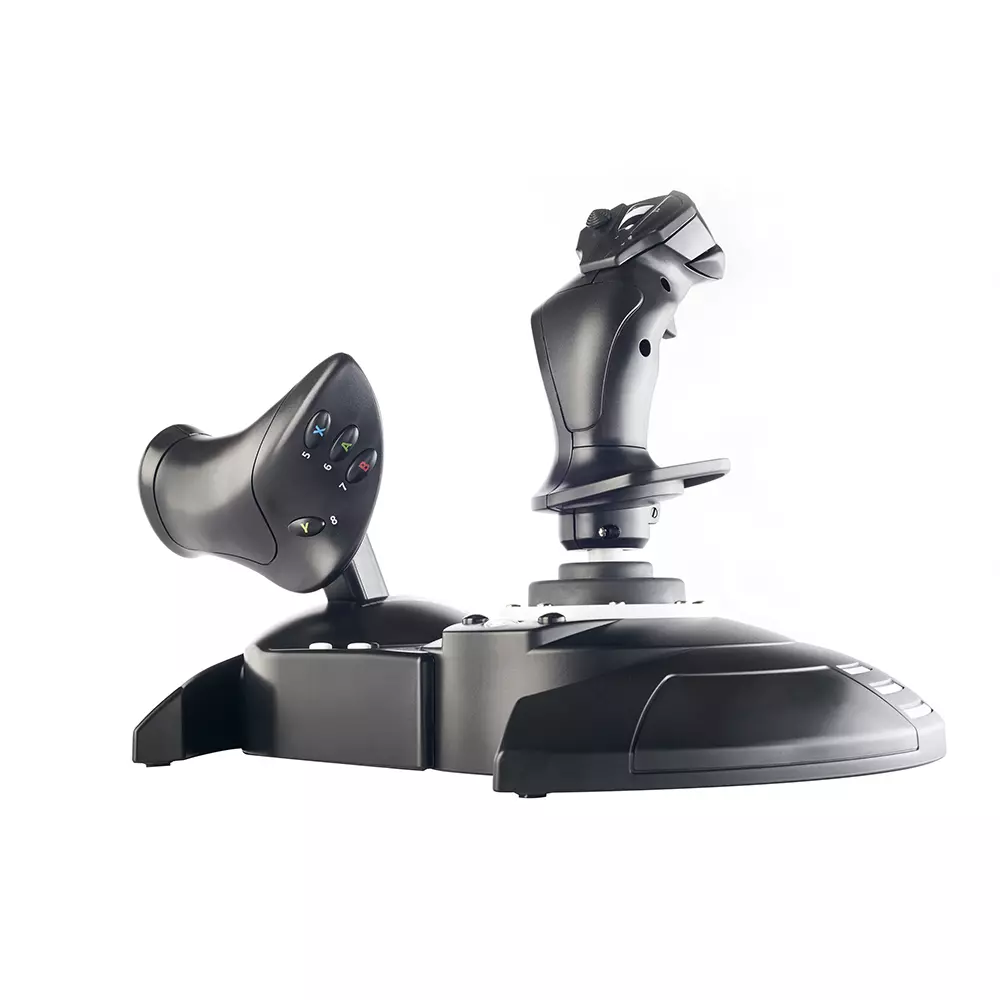
$99.99, and that is the price at Thrustmaster, Best Buy, Walmart and Amazon alike, so do not count on finding it much cheaper. Works on Xbox as well as PC, which is the main reason it exists and a genuine reason to buy it.
The downsides are not subtle. Reviewers note cheap materials, a null zone on both stick and throttle that is too small so tiny unintended movements register, and throttle sensitivity that is not adjustable. Combine that with the absent hall-effect claim above and you have a controller to learn on, not to keep. That is a legitimate purchase. Just make it deliberately.
Thrustmaster T.16000M FCS HOTAS
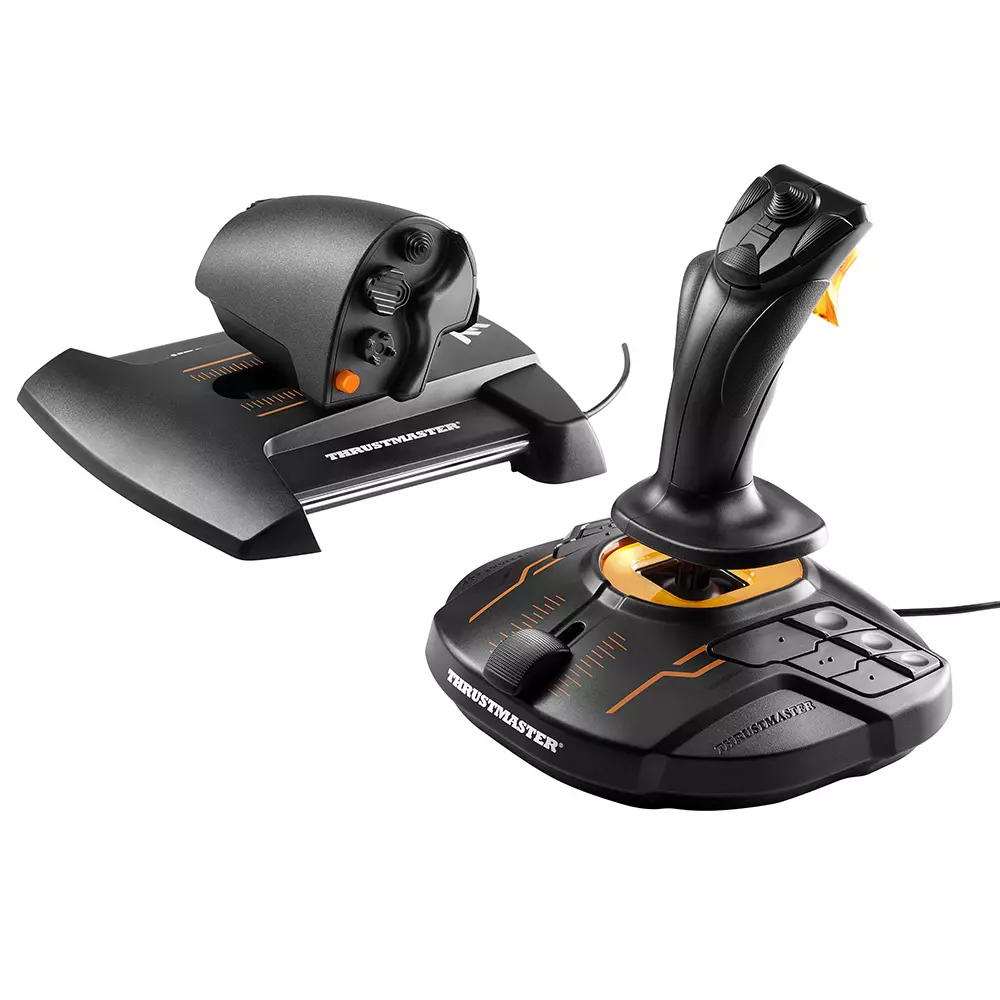
$169.99 for stick plus TWCS throttle. The stick is the star: hall effect, 16-bit, and ambidextrous. For the money nothing else offers that sensor in a full set.
The TWCS throttle is where the honesty comes in, and this is the detail buried in forum threads rather than review pages:
- The rails grab. This is not a lubrication problem in the normal sense. As one DCS forum user put it: "The problem isn't really a lack of lubrication; the problem is the material design which allows the runners to grab the rails." The community fix is Nyogel 767a grease, and users describe the difference as night and day. Budget an evening and a tube of grease.
- It is too light. Push the throttle forward and it slides across the desk. People weigh theirs down.
- The mini-stick on the back can drift, and users report roughly a 2% axis offset at idle that causes creep at zero throttle. Running
tm_calibresolves some of it.
Knowing all that, it is still the best value here. You are buying a very good stick and a throttle that becomes good after an hour of work.
Mid tier
VKB Gladiator NXT EVO
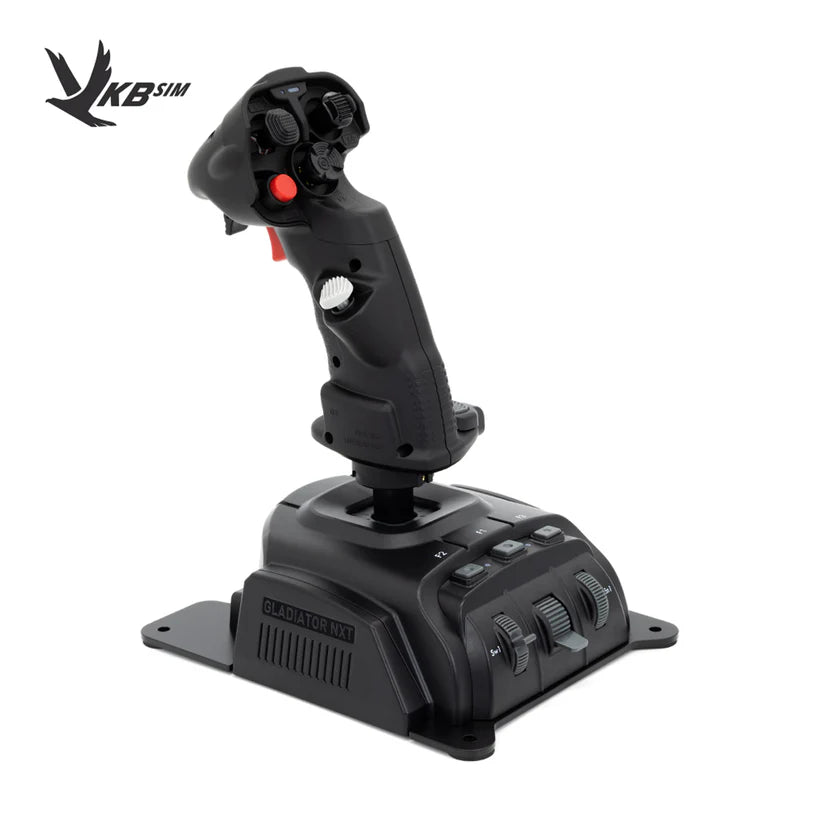
From $119 for the Space Combat Edition (right or left), $109 for the WWII Combat Edition, $149 for the F-14 Combat Edition. Hall effect throughout, and the precision is what people rave about. VKB also sell an Omni Throttle at $149 to pair with it, since the Gladiator is a stick, not a set. It inherits the same VKBConfig tax as everything else with a VKB badge on it, so price the evening in as well as the $149.
Downsides, from reviewers who liked it:
- The grip is small for large hands. Try before you commit if you can.
- VKBConfig is overwhelming. One reviewer described it as reading "like an internal engineering tool". It is powerful and it is not friendly.
- No printed manual, just a QR code.
- All-plastic base. It performs above its materials, but you can feel the price.
Buy this if you enjoy tuning. If you want to plug in and fly, the T.16000M will make you happier.
Turtle Beach VelocityOne Flightdeck
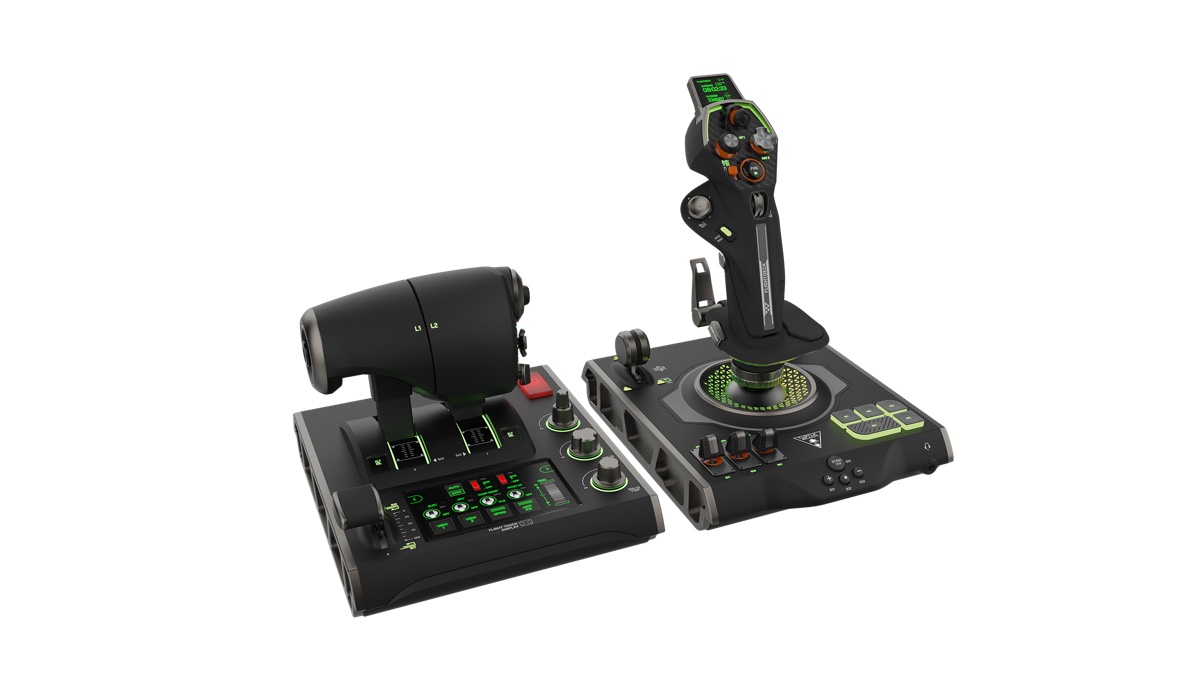
$399.99 US MSRP. That figure is the US MSRP specifically, and pricing in other markets differs wildly, so check locally before you anchor on it. It is a lot of hardware for the money and the button count is its selling point.
Downsides:
- No ready-made MSFS profiles. You will map everything by hand. On a device with this many inputs that is a real evening.
- The aux buttons, knobs and levers are only average quality. Quantity over feel.
- The HUD screen on the stick is mostly a settings menu, not the in-flight feature the marketing implies.
- PC only.
- Firmware updating is described as frustrating, and one reviewer at APH Networks reported that a May firmware update bricked both modules. That is one reviewer's experience of one update, not a standing defect, but it is worth knowing that firmware here has bitten someone.
Logitech G X56 (read this before you buy)
The X56 is on this list as a warning, not a recommendation, so there is no price here and no link. It shows up on ranking pages constantly and it has two documented problems that those pages do not mention.
The twist rudder is the weak point. Users report it never returns to the same spot, always pulling one direction, with a 10-15% centring deadzone that is frequently not centred. Remember the sensor split above: the stick is hall effect, but the throttles are potentiometers. A guide that praises hall effect and then recommends this set has not thought about it.
The throttle friction mechanism has been described by users as "viscous grease compressed between two slices of plastic", and it is inconsistent. There are also reports of ghost inputs when the unit is underpowered, with a powered USB hub as the workaround.
If you already own one and it works, fine. If you are choosing now, the T.16000M solves more problems for less money.
High end
Thrustmaster HOTAS Warthog
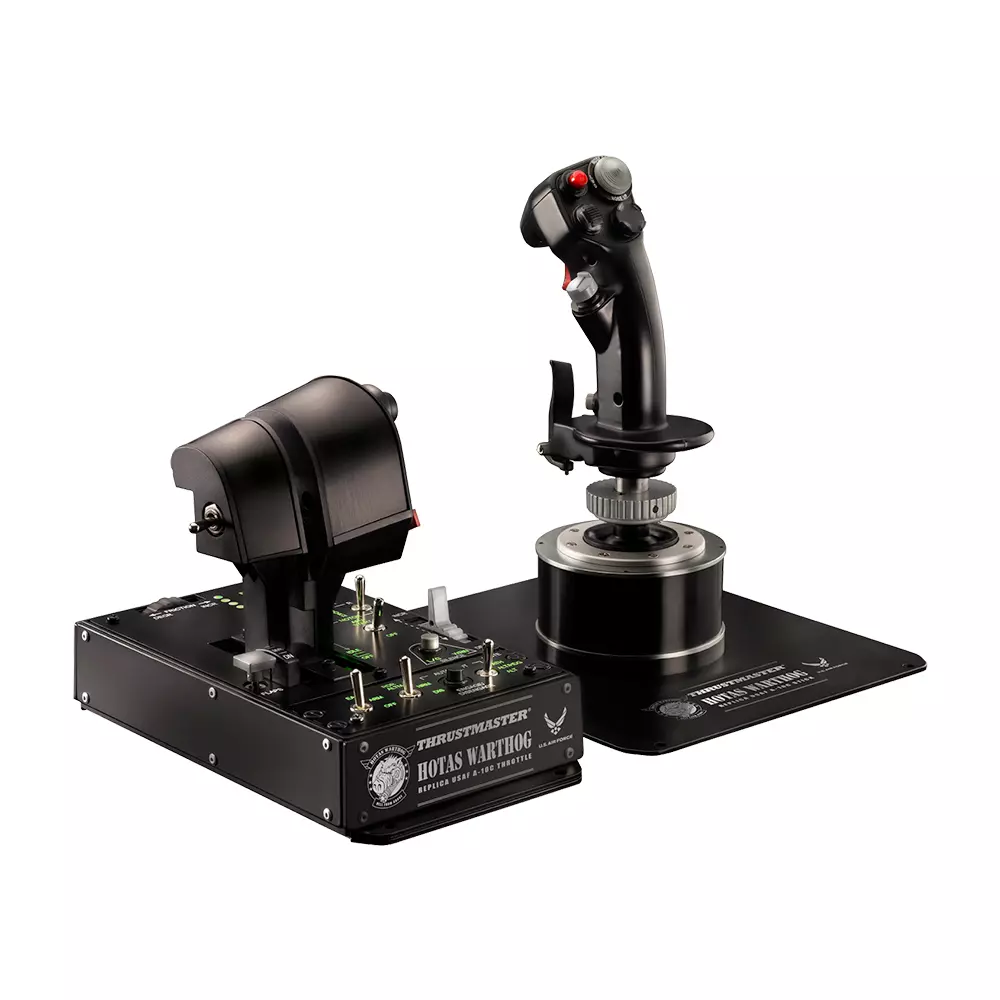
$599.99 for the set. It is a 1:1 replica of the A-10C's stick and throttle, it is mostly metal, and it is the reason a lot of people fly the A-10C II at all. The throttle's Pull/Push mechanism gives you real idle and afterburner detents, which is exactly what the Hornet start sequence above wants from you.
It shipped in October 2010 at $499.99 and it is the same product today at $599.99. That is not a criticism, it is the point: the design was right enough that fifteen years of competition has not replaced it. It does mean the quirks below are old, well documented, and not going to be patched.
Downsides, and they are the ones that matter:
- Slew (TDC) sensor drift is a recurring complaint. One user reports the X axis drifting left of centre and not returning, compensated with custom deadzones and curves in DCS. Another reports the slew ignoring left-right input when the vertical direction reverses. If TDC precision is your priority, go in knowing this.
- No twist rudder. The stick has pitch and roll only, because the real one does. Yaw comes from pedals or buttons. Pedals are a separate purchase on top of $599.99, so the real cost of a Warthog setup is meaningfully north of six hundred dollars.
Hall-effect enthusiast tier (modular)
VIRPIL WarBRD-D + Constellation ALPHA
The VPC WarBRD-D base is $259.95 list. That is the base only. The Constellation ALPHA grip is a separate purchase on top, and we do not have a verified price for it, so budget for a number you look up rather than one we guess. VIRPIL sell direct from their own store, and there is no link here for the same reason there is no grip price: we could not confirm one we would put our name on. That is a caveat about our checking, not about the hardware.
Build quality is rated very highly by reviewers. The downside is a specific one: swapping springs and cams requires two spanners of the same size, which is a step down in convenience from the MongoosT-50CM3. If you bought into VIRPIL specifically to tune the feel, that friction is on the exact thing you bought it for.
VKB STECS throttle
Modern Throttle System Mk.II: $209 for the Mini, $229 for the Mini Plus, $289 for the Standard, $329 for the Max. Check which line you are looking at, because VKB also sell a Space Throttle System under the same STECS name where the Standard is $259 and the Max is $309. This is the throttle to pair with a Gladiator NXT EVO, or with a VIRPIL stick, when the TWCS is not enough.
Same caveat as the Gladiator: it comes with VKBConfig, and VKBConfig is not a friendly piece of software. You are buying into an ecosystem that expects you to enjoy configuring things.
Winwing Orion 2 throttle
This one has no price in this guide and no link, deliberately. The Orion 2 is modular, the base and the grip are separate SKUs, so what you pay depends on what you configure, and we could not verify current vendor pricing to a standard we would put our name on. Go price your own configuration. We are including it anyway because of what it is, not what it costs.
What it is: the throttle that does the thing this guide has been arguing for since the Hornet start sequence up top. Two independently movable stalks, 16-bit contactless hall sensors, up to 80 degrees of motion, and adjustable detents you set where you want them rather than where Thrustmaster welded them. If the Throttle (Right) - IDLE (at 25% N2) step is the one you keep fumbling, this is the hardware answer to it, and the Warthog is the other one.
The problems reported by Boosted Media's review are specific and mostly ergonomic:
- The thumbwheels stand about 30mm proud and are easily bumped, especially in VR where you cannot see what your hand is doing.
- Four of the top switches share the same switch head, so you cannot tell them apart by touch. Again, a VR problem specifically.
- SimAppPro does not back up your existing assignments before applying a downloaded cloud config. That is a data-loss risk with a trivial fix that they have not implemented. Back up manually.
- The HDG/CRS rotary encoders had responsiveness problems in DCS.
What we would actually buy at each budget
Around $100: T.Flight Hotas One, and only if you are unsure about the hobby or you are on Xbox. Accept that it is a stepping stone.
Around $170: T.16000M FCS HOTAS. Order Nyogel 767a with it, run tm_calib on day one, put something heavy on the throttle. It punches far above the price after that.
Around $270 to $400: Gladiator NXT EVO plus a throttle, if you value stick precision above all. The Flightdeck if you want maximum inputs in one box and are willing to map every one of them yourself.
$600 and up: Warthog, if you fly the A-10C and want the real grip, and if you have already accepted the pedal purchase and the slew drift. Otherwise put the same money into a VIRPIL base plus grip plus STECS and build what you actually want.
FAQ
Do I need rudder pedals?
For most MSFS 2024 flying, no. Twist rudder or autocoordination covers you. For DCS, and specifically if you buy a Warthog, yes, because the Warthog has no twist axis at all and you have to get yaw from somewhere. Taildraggers and helicopters make pedals close to mandatory. That is a whole separate purchase and a whole separate conversation.
Will this work on Xbox?
The T.Flight Hotas One is the Xbox-compatible option here. The VelocityOne Flightdeck is PC only. Check compatibility on the product page before you buy anything else on this list, because "works with the sim" and "works with the console" are different claims.
Is the Warthog still worth it?
It depends entirely on what you fly. If it is the A-10C, you are getting the actual aircraft's controls and the answer is yes. If you fly a mix, you are paying $599.99 plus pedals for a metal replica of one aircraft's HOTAS, with a slew sensor that has a drift reputation, and the same money spent modularly gets you something better suited to you. It is not a bad product. It is a specific one.